What is the 1115 Reentry Services Demonstration?

Beginning In 2023, the Centers for Medicare & Medicaid Services (CMS) developed new guidance that allows states to provide reimbursement for certain Medicaid-covered services that treat behavioral health and chronic medical conditions for up to 60 days before release for people who are incarcerated. This initiative is called the 1115 Reentry Services Demonstration.

In September 2026, the Minnesota Department of Human Services secured CMS approval to participate in this demonstration. The first phase will involve three state prisons, four county jails and one Tribal detention center. The Department of Human Services is working closely with the Minnesota Department of Corrections to implement this first phase.

Pre-release services will include the assessment and treatment of substance use disorder (SUD), mental health and complex medical conditions. Following release, individuals will receive the full Medical Assistance benefit package including coverage for carceral case management for six months post-release.

Who is eligible?

During the first phase, only people who are incarcerated at select facilities will be eligible for 1115 Reentry Demonstration services:

  • Minnesota Correctional Facility in Faribault
  • Minnesota Correctional Facility in Shakopee
  • Minnesota Correctional Facility in Stillwater
  • Red Lake Detention Center
  • Hennepin County Jail
  • Scott County Jail
  • Stearns County Jail
  • Wright County Jail

In addition, eligible participants must meet general Medicaid eligibility requirements.

Will this initiative expand statewide?

Minnesota plans to expand the initiative statewide following a thorough evaluation of the first phase, though it would require legislative approval. During the first phase, only individuals at the selected sites will be screened for participation.

Why is this initiative needed?

Many people who are incarcerated have untreated mental health and substance use disorders. Providing care before release addresses an unmet clinical need and potentially reduces preventable deaths. It also substantially lowers short-term re-arrest and re-incarceration risks.

Continuity of health care increases the likelihood of stable housing, employment and social support after release — factors that improve public safety and long-term outcomes for communities.

Services that connect people to care at reentry can reduce future taxpayer dollars being spent on justice-involved and emergency-care spending. When people are treating their mental health and substance use disorders, communities as a whole experience fewer arrests, fewer emergency department visits and fewer in-patient admissions, shifting costs away from higher-cost services.

On average, pre-release programs that address a person’s mental health or substance abuse problems may reduce the cost of crime and long-run incarceration costs by $1.47 to $5.27 per taxpayer dollar, according to the White House’s Council on Economic Affairs.


When will eligible participants begin receiving services?

The Minnesota Department of Human Services must submit an implementation plan to CMS by Jan. 29, 2027. Pending approval of the implementation plan, people incarcerated at the sites selected for the first phase could begin receiving pre-release services in early 2028.

Will there be opportunities for public input on this initiative?

Since December 2024, a reentry services working group has been meeting to consider ways to improve the launch of this initiative and related policies for justice-involved individuals.

DHS and DOC are working closely with the sites selected for the first phase and community partners to develop an implementation plan. In the coming months, DHS and DOC will communicate upcoming opportunities to provide input on the implementation plan and overall project design.

The Minnesota Department of Human Services is committed to hearing all voices when it comes to the design and implementation of the 1115 Reentry waiver. Throughout the process, the state will prioritize voices of people with lived experience, both with mental health and SUD, and with the criminal justice system. This will be achieved through surveys, town halls and other opportunities for engagement that will be announced in the coming months.

How is progress being tracked?

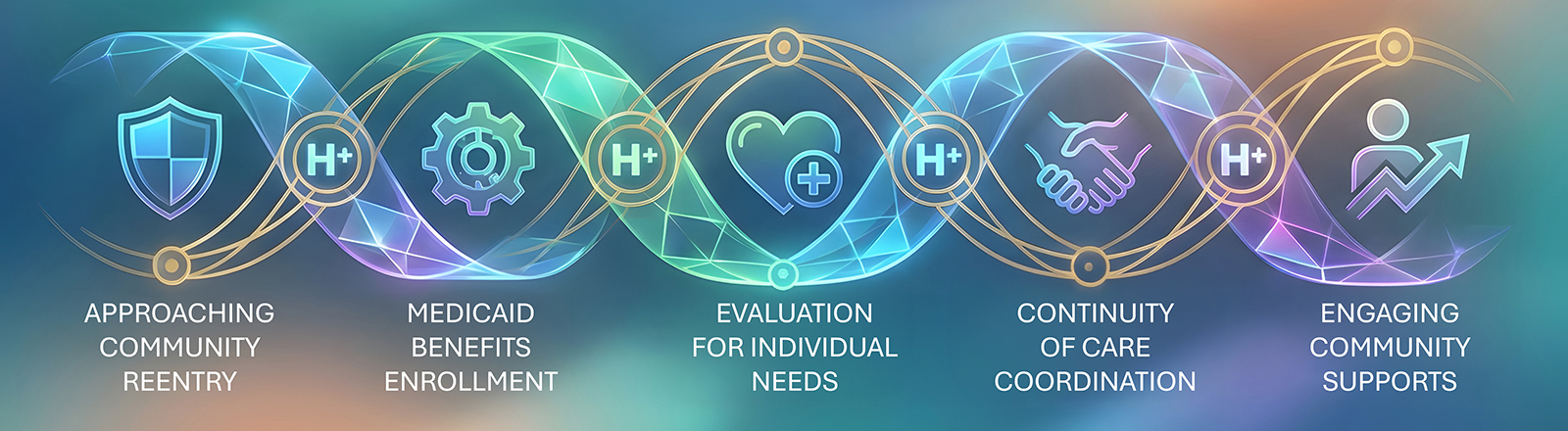
The Centers for Medicare and Medicaid Services require states to meet a set of defined milestones as part of their implementation plan. The demonstration is focused on strengthening coverage, services, continuity of care, connections to community resources and collaboration across systems.

Minnesota is providing regular updates as it makes progress towards the milestones. In September 2026, the Minnesota Department of Human Services published an update on Milestone 1, focusing on data sharing and early identification of uninsured individuals.

Receive future updates about Minnesota’s 1115 Reentry Demonstration, including information about progress towards CMS’ milestones, by signing up for 1115 Reentry Demonstration News and Updates.

back to top